How to Rank Your Website on Page 1 of Google
Don't tell people what you know; show them what you've done.
How to get your website to the first page of Google? Google traffic remains a primary entry point today. If your website can rank on the first page of Google for certain keywords, you will gain significant traffic, which is the foundation for ad revenue or subscription models. Therefore, this requirement is critical.
The following is a record of how I got a website to the first page of Google.
Best Practices
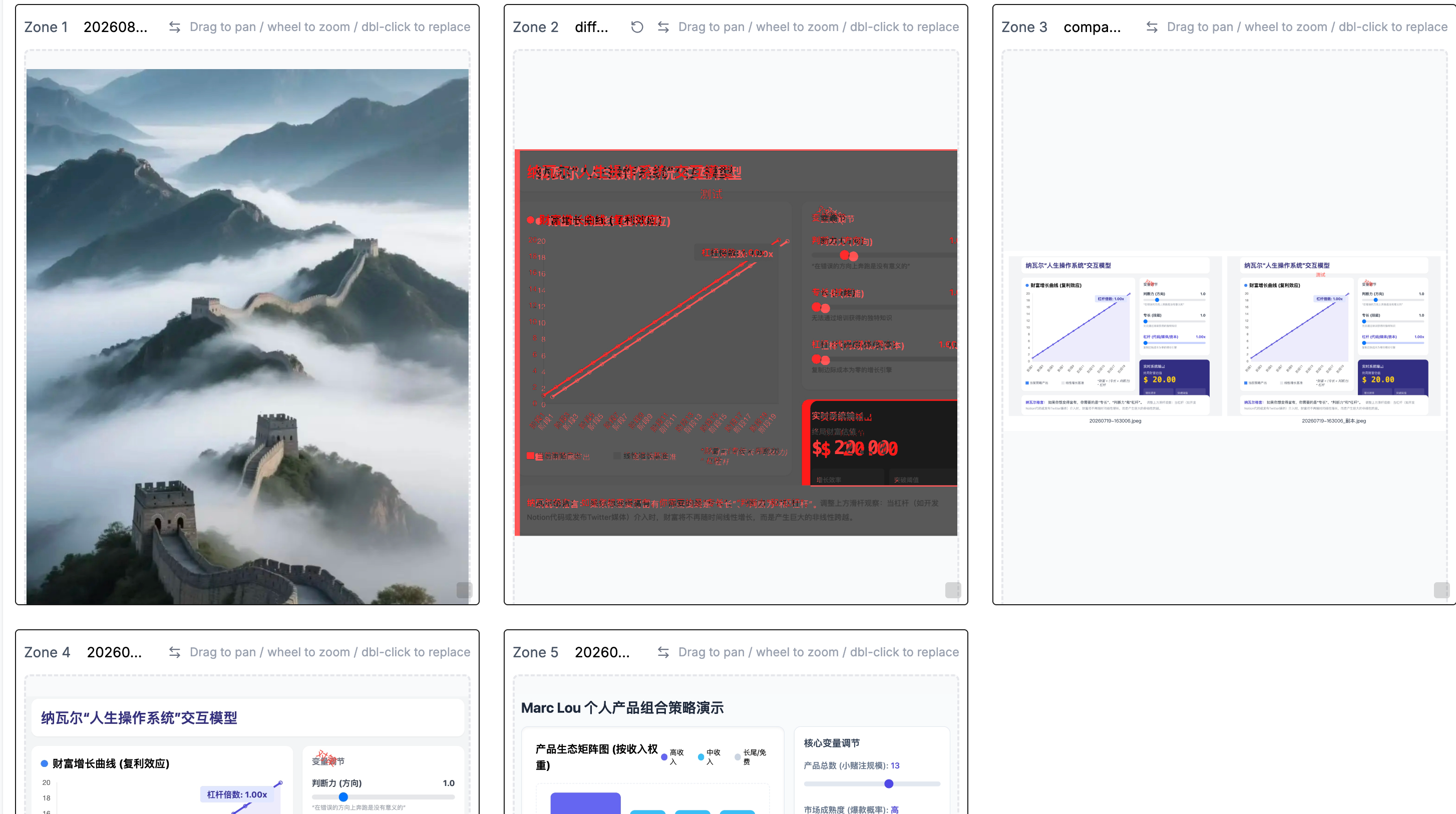
In September 2025, there was a requirement at my company to frequently view multiple images at the same time. However, there were basically no such products available. Generally, you could only open one image at a time. While you could configure a Mac to open two simultaneously, viewing many images at once was essentially impossible.
So, I built a feature for this: Multi-Image Preview.
For the first version, before I started using AI tools like Cursor and Claude, I manually wrote an online website using the Next.js framework to implement this requirement. After the functionality was implemented, I used it frequently myself, and later, I integrated Cursor and Claude to update it through multiple versions.
After finding it useful, I wanted to monetize it to earn some cash. There were two main options:
- Integrate Google AdSense;
- Charge for usage. Both of these options require traffic; monetization is only possible once you have traffic.
Traffic mainly comes from Google, so ranking the website on the first page for the corresponding search keywords became a more concrete goal and key focus.
After learning about Google's recommendation strategy, E-E-A-T, I realized that to rank on the first page of Google, besides the website having intrinsic utility, two main factors are key: backlinks and domain name.
Backlinks refer to third-party websites linking to your site. The more backlinks you have, the higher the authority of your site, and the higher it will rank on Google.
The domain name relates to the keyword demand you want to solve. If the domain name is more relevant, the recommendation weight is higher. For example, for the term "how to take a screenshot," a domain like take-a-screenshot.org or take-a-screenshot.com has very high authority, and facts prove this is true. The image below serves as proof.
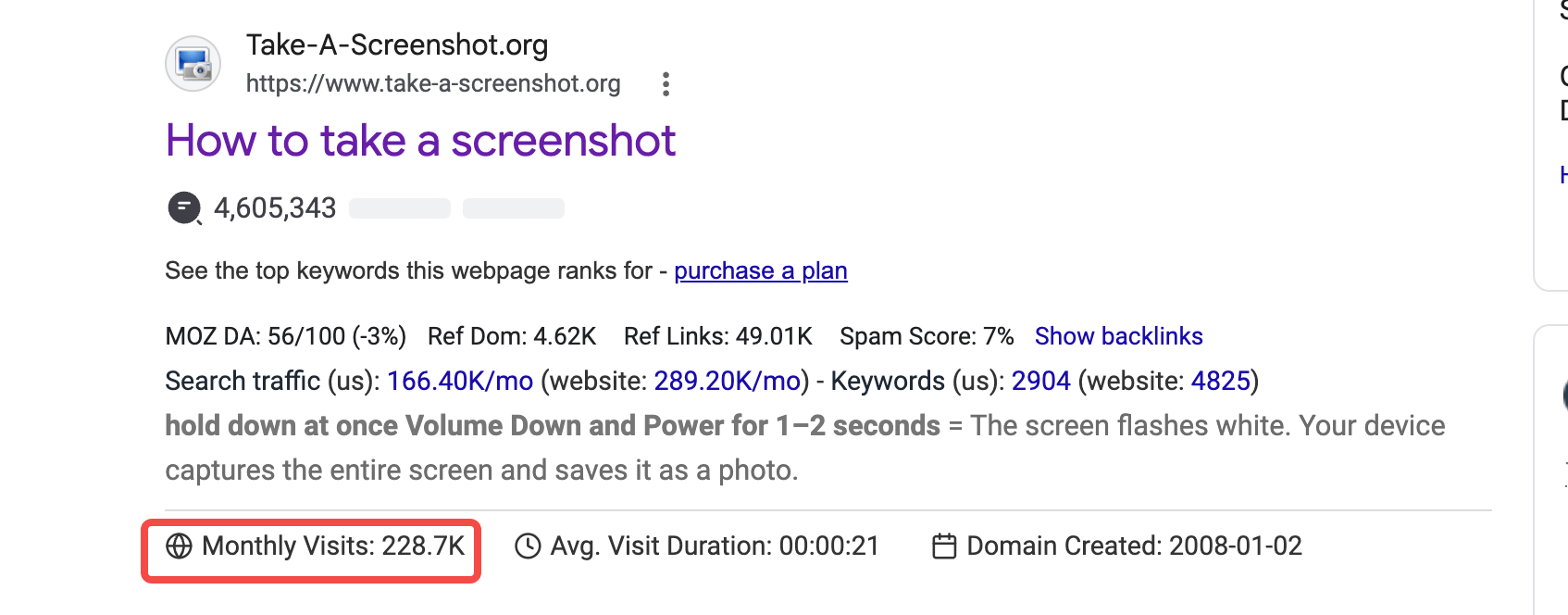
This site gets 140,000 visits per month, 59% of which comes from the United States, and its AdSense revenue is around $1,000/month.
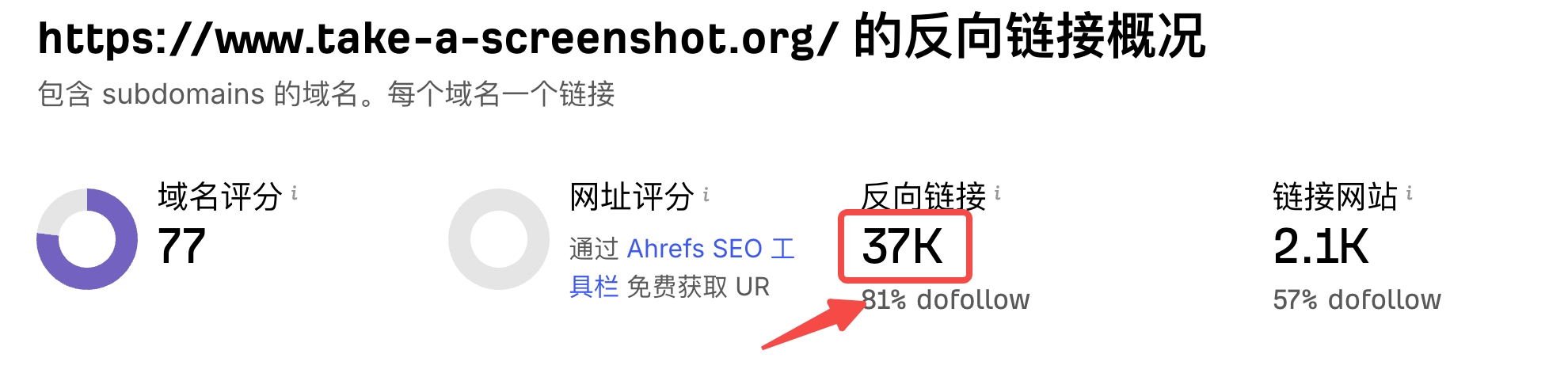
This site has excellent backlink data, and the domain name is very consistent with the demand for this keyword.
For the Multi-Image Preview, it’s the same—besides understanding user needs, you need to put effort into the domain name and backlinks. Understanding user needs is a basic skill, which requires an understanding of product and R&D.
A domain name can be confirmed and named around the core keyword, but keep it concise—no more than 3 words. Just like the previous example: "how to take a screenshot," for this keyword, using "take a screenshot" works as the keyword.
Consequently, for the Multi-Image Preview, I directly took a synonymous phrase as the domain and registered it.
Building backlinks takes time and is relatively difficult because, although the method is simple, the factor of time often defeats many people.
 There are many ways to build backlinks. The simplest is to search your keywords on Google, find the top-ranking competitor sites, analyze where their backlinks come from using Ahrefs, and build backlinks from those same places.
You can also go to Zhihu, Twitter, and Reddit to post and include links to your website.
There are many ways to build backlinks. The simplest is to search your keywords on Google, find the top-ranking competitor sites, analyze where their backlinks come from using Ahrefs, and build backlinks from those same places.
You can also go to Zhihu, Twitter, and Reddit to post and include links to your website.
Once the domain name is set, iterate on your website's functionality based on user data (GSC and GA) to keep it constantly updated. At the same time, keep working on building backlinks. As time goes by, your website can rank on the first page of Google and even grab the number one spot.
I have already ranked the Multi-Image Preview site on the first page of Google, integrated ads, and achieved passive income.
How to get a website to rank high? The technique is actually very simple: it just needs time to polish. And time is often the factor that defeats 99% of people. If you can overcome this time factor, then achieving this goal is not a challenging task.
Other Thoughts
In addition to the core factors above, I have some other insights from doing this and writing these articles, which I will share here:
Writing blogs to rank #1 on Google is about magnifying your writing ability. For those with writing skills, especially those with insight and discernment in a particular field, you can write articles around certain keywords and post them on your site to attract traffic. I have already achieved this; for some terms, a simple search leads to the #1 spot on Google, and the article content can funnel traffic to my independent site.
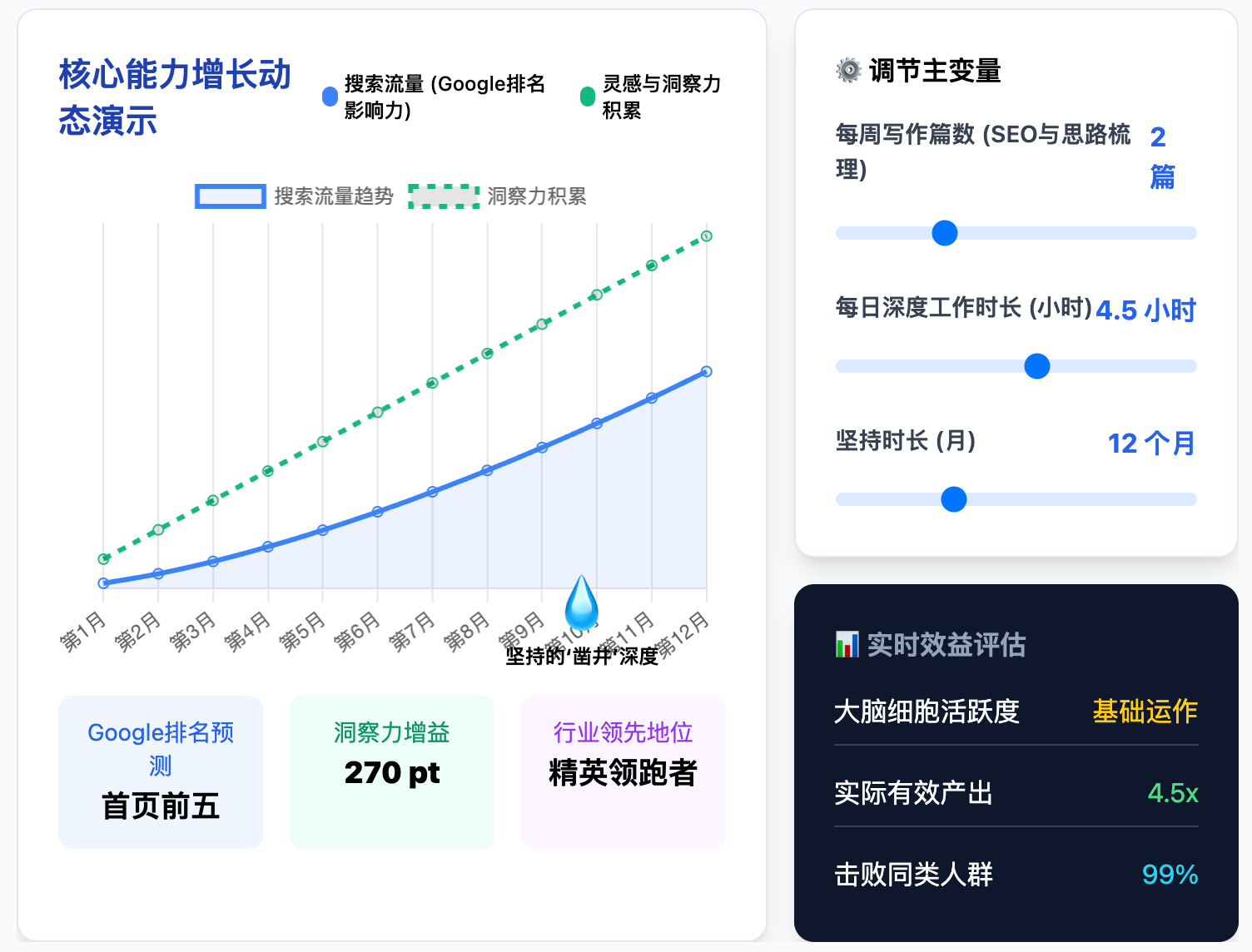
Use writing to organize your thoughts and gain inspiration. You should persist in producing 2-3 articles per week, because during the writing process, you engage all your brain cells to sort through your recent thoughts, actions, and ideas, which often leads to new inspiration. At the same time, it is a manifestation of deep work.
Maintaining 4 hours of deep work every day will crush 99% of people. Whether you are an office worker or an entrepreneur, I believe 99% of people cannot achieve the metric of 4 hours of deep work daily. Many people either kill time at their desks, do mechanical tasks, or are stuck in constant meetings. The actual time spent doing real, effective work per day does not exceed 4 hours. So, how do you achieve 4 hours of deep work? The prerequisite is to shut down social apps and websites—like WeChat, Feishu, Twitter, Reddit, etc.—and engage in deep work when your energy is at its peak. Given time, you will find your actual output to be enormous.
'Time' is the most difficult factor. Many difficult things are simple in technique; they just need time—constant chiseling until you find the 'water source.' Therefore, if you have a determined task or goal, and the logic is feasible, just persist. Don't use scrolling through short videos to fill your fragmented time; instead, keep chiseling and refining until the 'water' flows out one day.
Getting a website to the first page of Google is not actually complicated: find the real demand, choose the right keywords, continuously create content and backlinks, and then give time some time.
What really creates the gap is often not technique, but whether you can persist in doing things that are correct but show no short-term returns.
If you are also building an independent site, doing SEO, or working on content growth, feel free to leave a comment:
What is the keyword you most want to rank on the first page of Google right now?