How to Improve a Subscription-Based SaaS
Muscles don't record your emotions; they only respond to an increase in load.
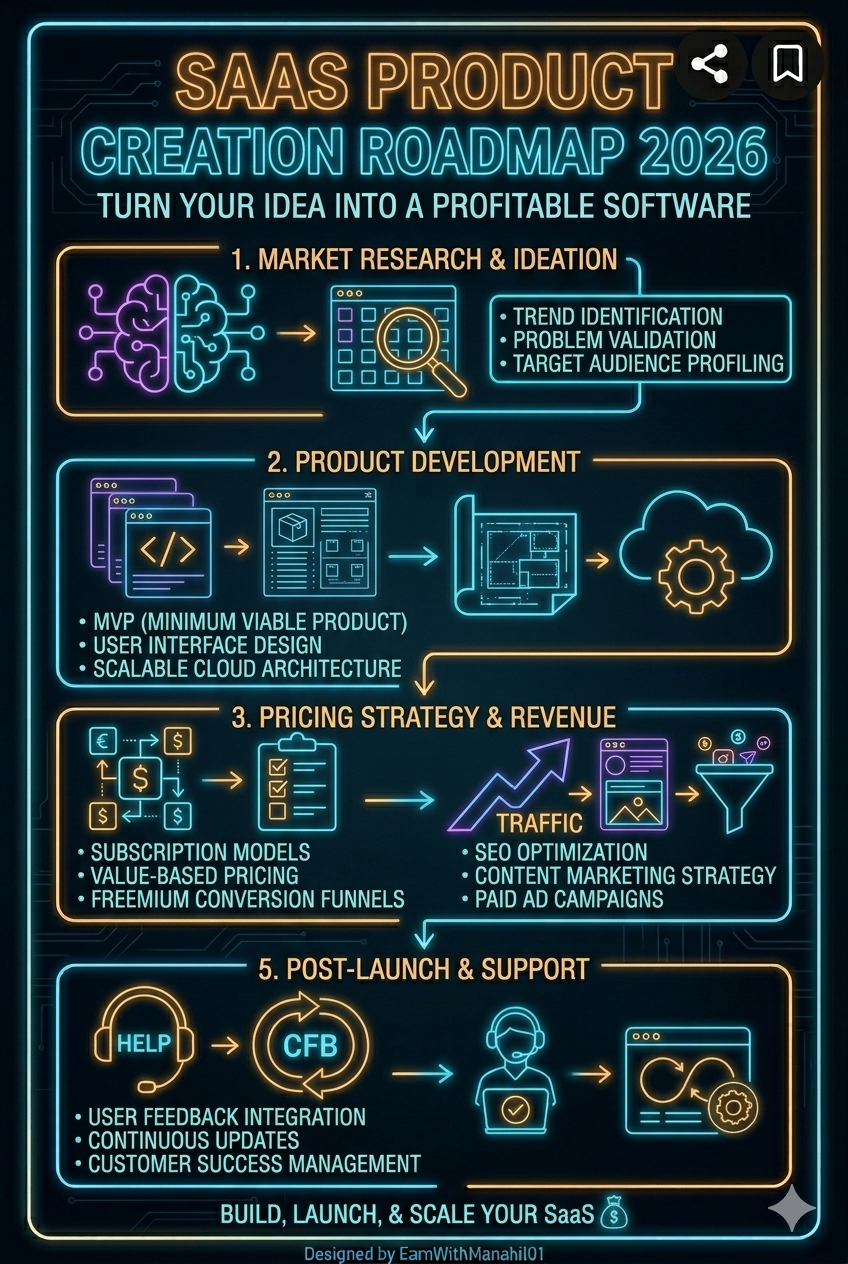
I have been running a subscription-based SaaS for over a year now, and I have achieved two main results:
-
I have received a certain amount of revenue in USD. The 0-1 stage is complete, and I am now pushing toward 10.
-
Some of the SaaS products have stable daily active users (DAU), and I am currently iterating on the product based on user behavior.
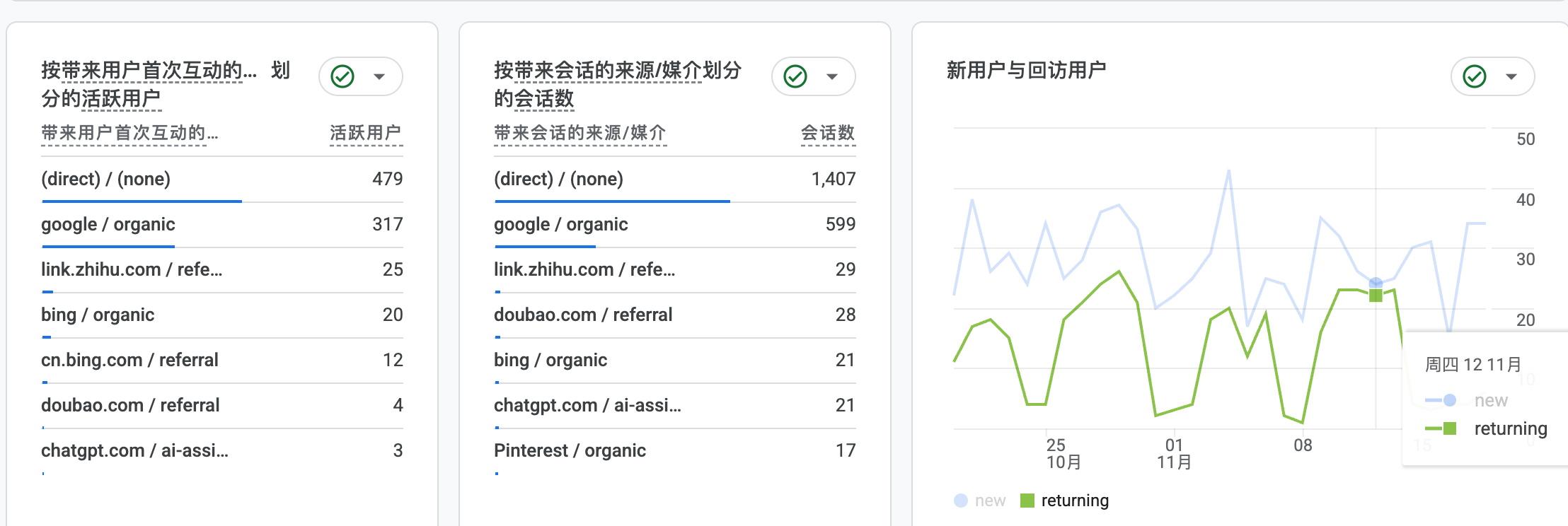
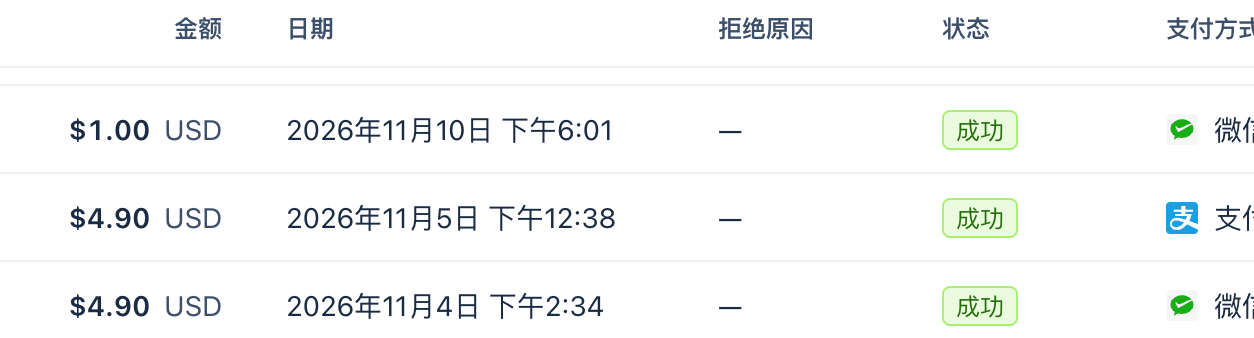
There are other takeaways:
-
I successfully posted links on Reddit without getting my account banned.
-
I have mastered major overseas social media platforms: Pinterest, Threads, Twitter, Instagram, TikTok, etc.
-
I have used various AI models with strong programming capabilities, and I still recommend Claude above all else. Other models include Codex, Gemini, and Grok.
There are many other takeaways, but I won't list them all here.
However, the most important thing is to review. If I were to do a subscription-based SaaS all over again, how would I do it?
I would still divide it into three steps: demand discovery, product development, and operational growth.
Demand Discovery
- Place core features in the most prominent spot on the homepage, rather than requiring users to click several times to find them. Make it "what you see is what you get," and don't make users think.
For example, when a user opens the homepage, display the core interactive features directly to give them an intuitive experience; only force users to log in when they perform complex operations. Login must support Google, as overseas users are generally Google users.
Just like the first principle in the book Don't Make Me Think: don't make me think. Users come to get results and leave; don't make them think about where to get those results—they don't have that much patience.
- Demand discovery is the first step, and it is also the hardest. Do not limit yourself to keyword-based discovery. Instead, look at competitors, especially those with stable MRR. They have already gone through the hard work of demand validation and achieved results. If you find something in a competitor's product that resonates with you, just copy it and put it online to see how it performs. Recommendation: Keep an eye on products on platforms like Toolify and TrustMRR.
Product Development
- Integrate Google GA and GSC immediately. You can see your product's traffic and user behavior.
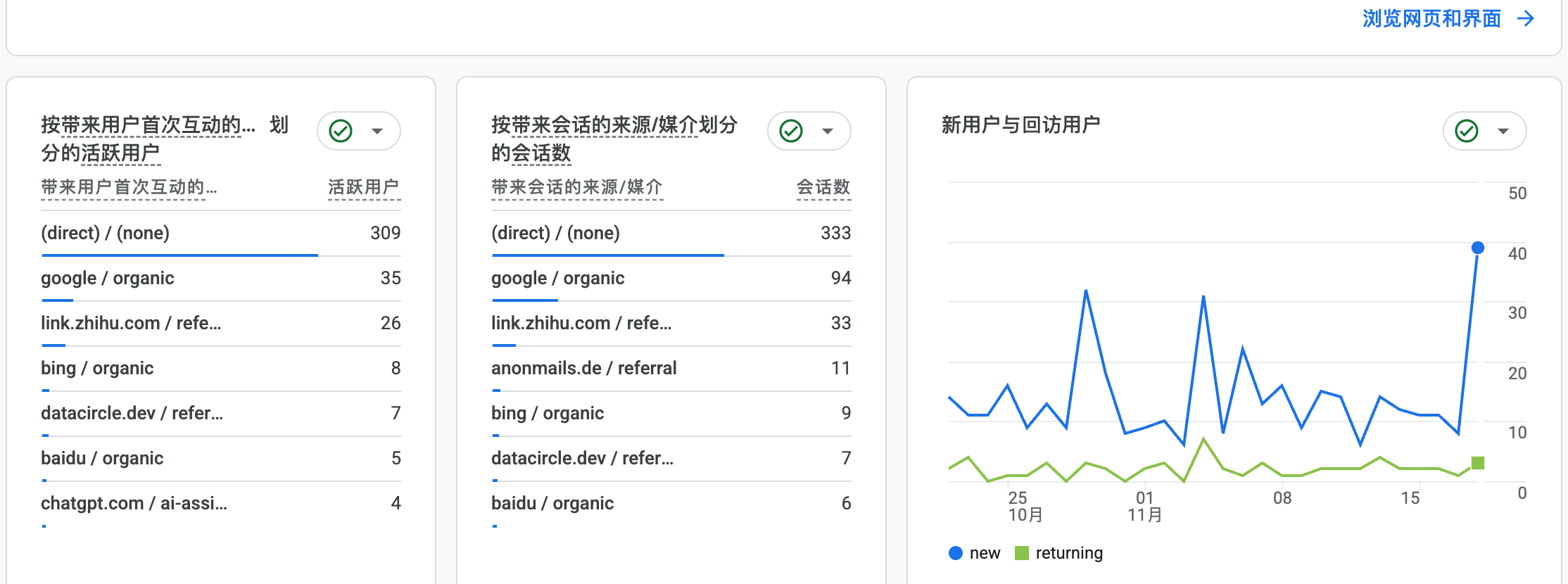
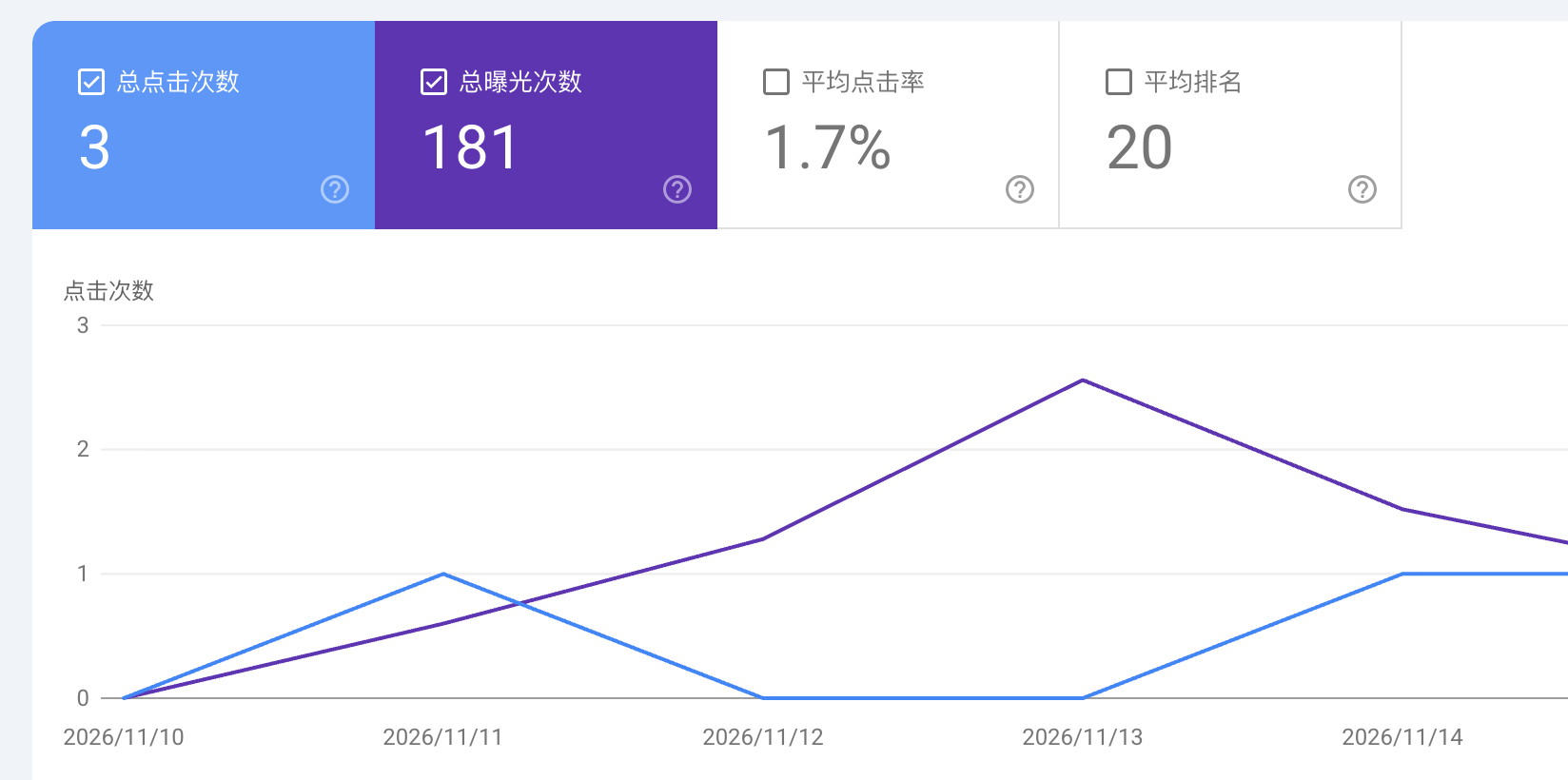
- The structure of an excellent SaaS is often fixed. Once you have solidified it into a "Skill," you can build new sites directly using this template. This saves technical SEO work, and the rest is just full-throttle backlink submission.
Operational Growth
-
Until your traffic reaches 10,000 DAU or 10,000 daily clicks from Google, integrating ads is largely pointless; the income won't be significant.
-
Your first 100 users likely won't come from SEO; you must use social media in the early stages. Domestic (China): Zhihu, WeChat Moments; Overseas: Threads, Pinterest, Reddit.
-
Don't look at user data every day—once a week is enough. Looking at it too often makes it easy to fall into a trap of anxiety. It's like someone trying to lose weight; they might weigh themselves every day, but the body follows a weekly metabolic cycle, so weighing once a week is sufficient.
-
For SEO, go build backlinks; for GEO, keep updating content (content can be data-driven). SEO values the number of backlinks; GEO values the quality of backlinks. When building backlinks, you can usually find lists of link collections—sometimes hundreds of sites—but don't submit to too many in one day, or Google will mark it as spam. Submitting to 10-30 sites per day is fine. You can do this manually or use Grok or Codex for AI-automated submission. Both have their merits; by doing it manually, you will discover many links from competitor sites. When you lack demand ideas, you can just copy one of theirs and launch it.
-
Referring to the success rate of early successful indie developer SaaS: 5%. A rough estimate is that you need to build 20 to create one successful SaaS. This follows the laws of nature; any field requires a certain cycle of trial and error to achieve success. A "successful" SaaS here isn't one with every feature under the sun, but one that provides you with stable MRR.
-
Don't give up on Reddit. We usually just write a piece of text with our SaaS link and post it in a subreddit. However, the biggest value of Reddit is not simply crude promotion of your SaaS, but using it as a scarce community forum to find and dig for real demand in the field you want to enter. For example, if you want to target the needs of social media influencers, you should look for relevant subreddits, see what everyone is discussing, be realistic, identify the objective needs, form a product philosophy, and build an MVP for low-cost testing. The reason Reddit is a scarce resource is that it is the only community I have seen that requires manual posting and has very strict moderation.
-
No matter what, a SaaS must always revolve around Google's E-E-A-T principles. The "T" (Trustworthiness) is the most important, which is the essence of trade; only when there is mutual trust can a transaction occur.
Having written this, I realize there are 7 points under operational growth. It seems that "good wine still fears the deep alley"—SaaS operational growth is the priority.